
Welcome to MDCUNE!
The Modular Digital Course in Undergraduate Neuroscience Education (MDCUNE) provides modules of instruction based in neurobiology for faculty to use in their own courses or for independent learning. These modules are inquiry-based but are completely digital so that only computers are required for their execution. These modules have been successfully taught in Psychology and Neuroscience laboratory courses at UCLA and all tutorials and programs are now available for free.
The goal of this project is to create a series of completely digital, inquiry-based laboratory modules in neuroscience and to make them freely accessible to students and faculty at a wide range of institutions. This project will give students a truly rich, hands-on introduction to neuroscience research while requiring no equipment or facilities other than computers connected to the internet. The digital and modular nature of these materials provides for a great deal of flexibility in teaching and delivery.
For more specific information about this project see the following article:
- “Modular Digital Course in Undergraduate Neuroscience Education (MDCUNE): A Website Offering Free Digital Tools for Neuroscience Education” – by William Grisham from the Journal of Undergraduate Neuroscience Education (JUNE)
Modules, Programs, Presentations:
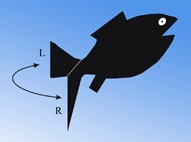
Module: Swimmy
Developed by Dr. Franklin Krasne
Free and complete software providing neurophysiological phenomena and mechanisms of motor pattern generation in virtual neural circuits.
See the Swimmy Module for more information.
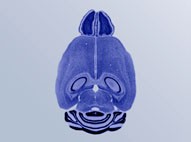
Module: Bioinformatics/Neuroinformatics
Developed by Dr. Jackson Beatty and Dr. William Grisham
IQuantify brain phenotype and perform Quantitative Trait Locus analysis linking variation in the phenotype with chromosomal loci.
See the Bioinformatics Module for more information.
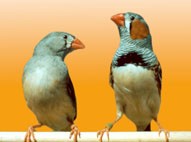
Module: Bird Song System
Developed by Dr. William Grisham
Examining sex differences in songbird nuclei, and comparing effects of various doses of estrogen given to females in post-hatch development.
See the Bird Song System Module for more information.
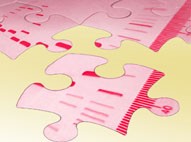
Module: Gel Scramble
Developed by Dr. William Grisham & Dr. James R. Boulter
Unscramble the data and solve the puzzle of the mystery gel.
See the Gel Scramble Module for more information.
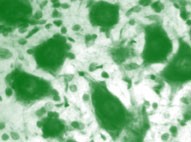
Module: Rat SCIA (Spinal Cord Image Archive)
Developed by Dr. William Grisham, Heidi Jones & Sun Hee Park
Analyze sex differences and effects of prenatal antiandrogens on spinal cord motoneurons. Details are also described in Grisham et. al., 2003.
See the Rat SCIA Module for more information.
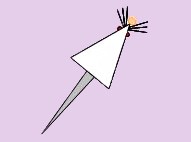
Module: Fraidy Rat
Developed by Dr. Franklin Krasne
Free and complete software providing experience with anatomical and physiological bases of fear-learning in a computer-simulated rat.
See the Fraidy Rat Module for more information.
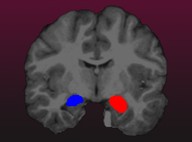
Module: Structural MRI
Developed by Dr. William Grisham
Quantify the brain and select structures (e.g. amygdalae, hippocampi, thalami) in MRI scans of various patients.
See the Structural MRI Module for more information.
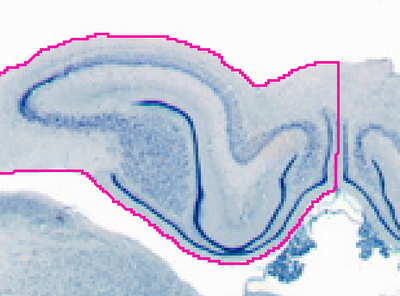
Module: Comparative Neuroanatomy
Developed by Dr. William Grisham
Quantify the hippocampus and associated brain region in numerous mammal species, and compare volumes by animal order.
See the Comparative Neuroanatomy Module for more information.
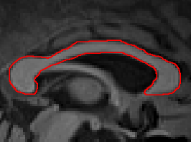
Module: Corpus Callosum
Developed by Dr. William Grisham
Quantify the corpus callosum and its subregions based on two competing schemes of anatomical functionality.
See the Corpus Callosum Module for more information.

Presentation: “Evaluation for Smarties”
Presented by Dr. William Grisham & Lisa Beck McCauley
Presentation for the “Methods for Evaluation and Assessment” workshop at the CCLI-TUES PI Conference in Washington, DC, January 26-28, 2011.
See the Evaluation Presentation for more information.
Project: iNeuro
Created by Dr. William Grisham
A project dedicated to providing curricula and resources for handling large-scale data analysis.
See the iNeuro Project for more information.
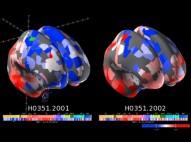
We are participating in Brain Awareness Week!
See the Brain Awareness Week for more information.
Image source: Allen Brain Atlas
Program: NeuroCamp
Created by Dr. Joseph Watson
An introduction to neuroscience through a series of short modules and experiments. For select high school students.
See the NeuroCamp Program for more information.
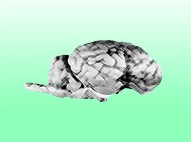
Program: NeuroScholars
Created by Dr. William Grisham and Elaine Hsaio
A neuroscience scholars program.
See the NeuroScholars Program for more information.
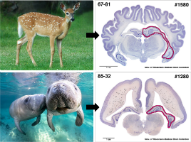
Research: Comparative Neuroanatomy Data
Created by Dr. William Grisham
A research project devoted to comparative neuroanatomy.
See the Comparative Neuroanatomy Research Project for more information.
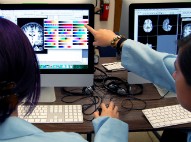
Data: Data Entry
Created by Dr. William Grisham
For UCLA students enrolled in the NS101L and Psych116 courses.
See the Data Entry page for more information.